comparison
Should I deliver my meals myself or hand the routes to a courier service this season?
Own van, contracted courier or customer pickup each carry different cost per stop, cold chain risk and liability. A direct comparison for a kitchen running under two hundred boxes a week.
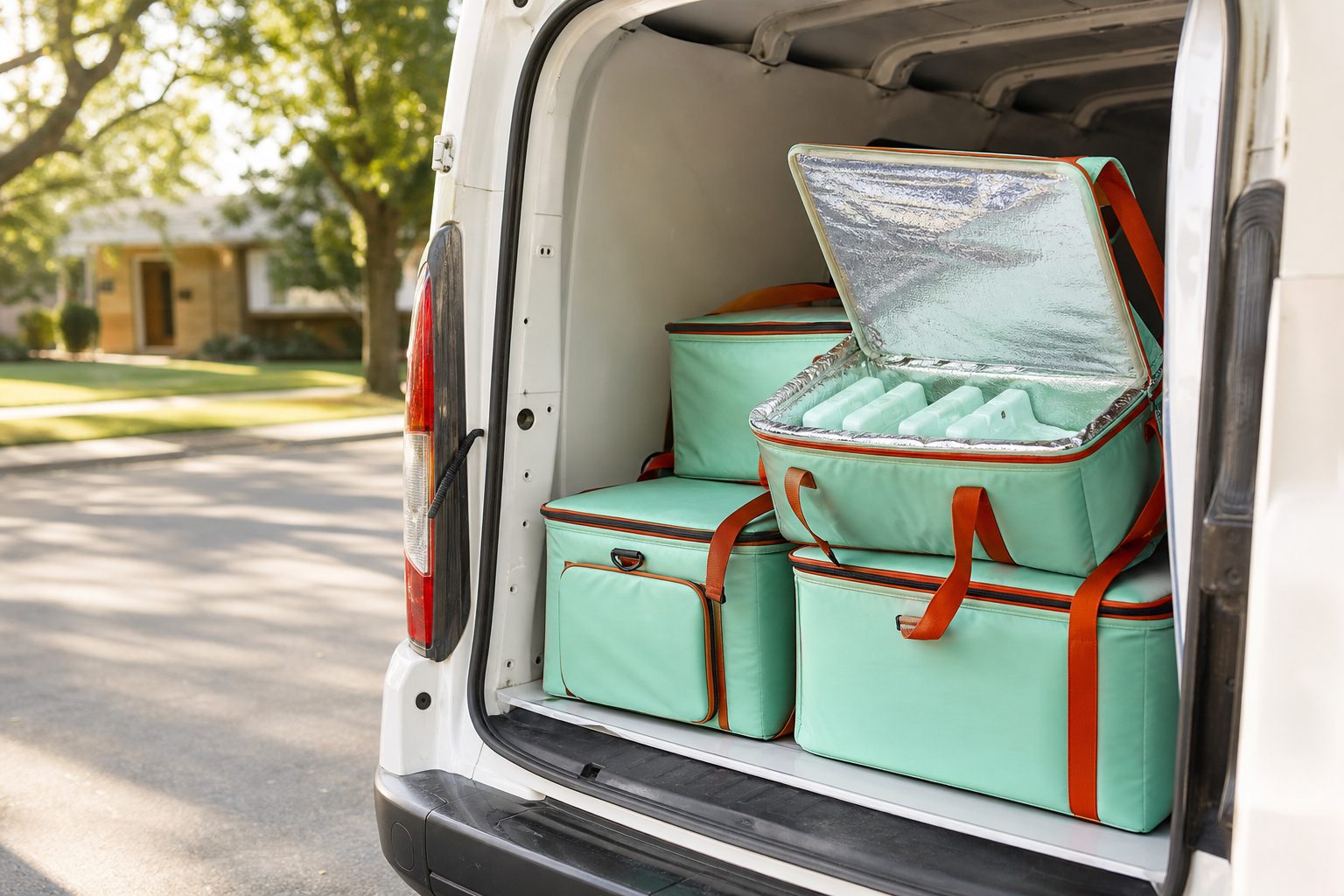
Under roughly 200 boxes a week, driving your own routes is almost always cheaper per stop, and the reason is not fuel. It is that a courier prices a stop as a standalone errand while your van prices a stop as one more house on a street you were already driving. Route density, not mileage, is the number that decides this.
The honest version of the answer has a second half. Cheaper per stop is not the same as better for the business, because your own routes consume the one input you cannot buy back, which is Thursday and Friday of every week, in the season when you should be selling. Handing routes to a courier is often a decision to convert your time into cash at a known rate, made with your eyes open.
So build the number first, then decide what your Friday is worth.
Cost per stop for your own vehicle including fuel, insurance and time
Most operators price their own delivery at the gas station receipt and stop there. Build it instead from every line the van consumes. Assume a cargo van you own outright, 90 stops on one delivery day, 105 road miles, four hours forty minutes of driving and doorstep time, and a driver at $22 per hour loaded with payroll taxes.
| Line | Assumption | Day cost |
|---|---|---|
| Fuel | 105 miles at 16 mpg, $3.60 per gallon | $23.63 |
| Maintenance and tires | $0.11 per mile | $11.55 |
| Vehicle replacement reserve | $14,000 van over 5 years, 45 delivery days a year each year | $62.22 |
| Commercial auto insurance | $2,400 a year over 45 delivery days | $53.33 |
| Registration, plates, inspection | $480 a year over 45 days | $10.67 |
| Driver labor | 4.67 hours at $22 fully loaded | $102.74 |
| Ice packs and consumables | 90 boxes, $0.35 each in gel packs and liners amortized | $31.50 |
| Total | 90 stops | $295.64, or $3.29 per stop |
Those are assumptions, not measurements from your business. Swap in your own, especially delivery days per year, because that divisor swings the fixed lines hard. A van used 45 days a year carries $126 of fixed cost per day. The same van used 100 days carries $57.
Notice what happens when volume drops. Run the same day with 40 stops instead of 90 and your fuel and labor fall only a little, because you are still crossing the same territory. Cost per stop goes to roughly $6.40. That doubling is the whole argument in one line.
Keep reading: Why do my customers say the beef comes out watery after they reheat my frozen entrees?
What third party couriers charge and how zone pricing works
Local courier and last mile companies price a residential cold delivery three ways, and you need to know which one you are being quoted.
- Per stop, zone banded. A flat rate inside zone one, a step up per ring, where zones are drawn as rings or zip clusters from their depot.
- Hourly route rate. You buy a driver and vehicle for a block, commonly a four hour minimum, and fill it. Closest analogue to your own van, and where a dense route gets cheap.
- Per package with dimensional weight. Common with parcel style carriers. A frozen box with a two inch foam wall bills on its cubic size, not its weight, and an insulated shipper punishes you here.
Ask four questions before comparing any quote to your own number. What is the fuel surcharge and how does it float? What is the reattempt fee? Is there a residential surcharge? What is the minimum stop count or minimum spend per route?
That last one matters most for a seasonal kitchen. A courier who quotes $6.50 per stop with a 60 stop minimum is charging you $390 whether you have 60 boxes or 35.
Cold chain control and who is liable when a box thaws
A frozen entree does not fail when it thaws. It fails quietly, hours earlier, when the surface warms above 41 degrees Fahrenheit and stays there. The customer never sees that. They see a meal that tastes off three weeks later.
Your own driver gives you three things a courier will not guarantee. Loading order, so the last stop is packed coldest. Dwell time, because your driver does not leave the van doors open through a porch conversation. And the porch decision, whether a box gets left at a house with no answer on a 94 degree afternoon.
On liability, read the courier contract for the limitation of liability clause. Most standard last mile contracts cap their exposure at a low per package figure, often in the range of $100, and many exclude perishable goods from coverage entirely unless you buy declared value. If they exclude perishables, then a truck that breaks down in August is your loss and your customer service problem regardless of whose driver it was.
Either way, put a single use temperature indicator or a data logger in a sample of boxes for a few weeks. You cannot negotiate a cold chain standard you have never measured.
Keep reading: How does a small kitchen safely serve a family with a peanut and dairy allergy every week?
Insurance, hired and non owned auto coverage, and worker classification
Two exposures sit under the delivery question, and both are the kind that only surface after something goes wrong.
The vehicle
A personal auto policy generally excludes business use. If anyone delivers customer orders in a personal car, you need hired and non owned auto liability, usually an endorsement on your general liability policy. It is inexpensive, and it is the coverage most small food businesses discover missing at the worst moment. If you own the van, you need commercial auto in the business name.
The driver
Calling a driver an independent contractor does not make them one. Classification tests vary by state, and several states apply an ABC test, under which a worker is presumed an employee unless the hiring entity proves all three prongs, including that the work performed is outside the usual course of the hiring entity's business. Delivery of your meals by a person you schedule, route and supervise is a hard fit for that middle prong.
The clean answers are: hire them as an employee with workers compensation coverage, or contract with a courier company that employs its own drivers. The messy middle, a friend with a car paid cash per route, is where the state labor department finds you.
Pickup hubs and porch drop policies as a middle path
The cheapest stop is the one you never drive. A pickup hub converts 20 deliveries into one, and for a suburban kitchen with a cluster of customers around a gym, a church parking lot, a farm stand or a coworking space, it is the highest leverage move available.
You need a host with a reason to want the foot traffic, a 60 to 90 minute window people can actually make, a chest freezer or a well managed cooler on site, and a hard rule about unclaimed boxes. Write the no show policy before your first hub.
Price it as a discount rather than a courtesy. If your delivery cost per stop is $3.29 and a hub stop costs you roughly $0.40 in staff time and cooler consumables, a $3 pickup credit is close to neutral for you and reads as real money to the customer.
See how FreezerFive handles this for meal prep and freezer meal businesses
Route density as the number that decides this for you
Density is stops per hour on route, and it is the single figure that predicts your cost per stop better than mileage, box count or revenue.
Compute it honestly: total stops divided by total route time, van loaded to van empty, including the drive out and back. A tight suburban route runs 15 to 22 stops per hour. One spread across three towns runs 6 to 9. Below about 6, your own van rarely beats a courier, because you are paying a driver to look at scenery.
Two things move density and both are in your control. Delivery windows by neighborhood rather than by customer preference, which is the easier one to sell than owners expect. And a minimum order value in your outer zones, so a $38 box does not pull the van eleven miles.
Choosing by weekly volume: a simple decision table
Use this with your own cost per stop from section one, not the illustrative one.
| Weekly boxes | Density | Usual best answer |
|---|---|---|
| Under 60 | Any | Pickup hub plus a short owner driven route for the loyal outliers. Courier minimums eat you alive at this size. |
| 60 to 200 | Above 12 stops per hour | Own vehicle. This is the band where your cost per stop is genuinely lower and one delivery day still fits the week. |
| 60 to 200 | Below 8 stops per hour | Courier for the sparse zones, own van for the dense core. Split the map, do not split the decision. |
| 200 to 500 | Any | Two vehicles or a contracted route. Past one full van day, the second driver, second insurance line and second load out change the math. |
| Above 500 | Any | Contracted last mile with a negotiated hourly route rate, and keep one van for makegoods and VIPs. |
One more test that overrides the table. If you are the only person who can drive the route, and driving it means you are not selling, hiring or cooking on your highest value day, then the courier is cheaper than it looks. Price your own hour at what a new customer is worth, not at $22.
What to do next week
Run one week of measurement: stops per hour, actual route time door to door, and every annual fixed cost the van consumes divided by delivery days. Then get two courier quotes with the four questions above answered in writing. The answer is usually a split map rather than an either or.
The part that makes any of this workable is grouping. Routes only get dense when orders are sorted by neighborhood before anyone loads a van, and that has to happen automatically from the week's order list rather than at 6 a.m. on a clipboard. FreezerFive takes the week's orders and groups them into delivery routes alongside the pick list and thaw quantities, so the density number you just calculated is something you can improve every week instead of something you discover afterward.
Read also
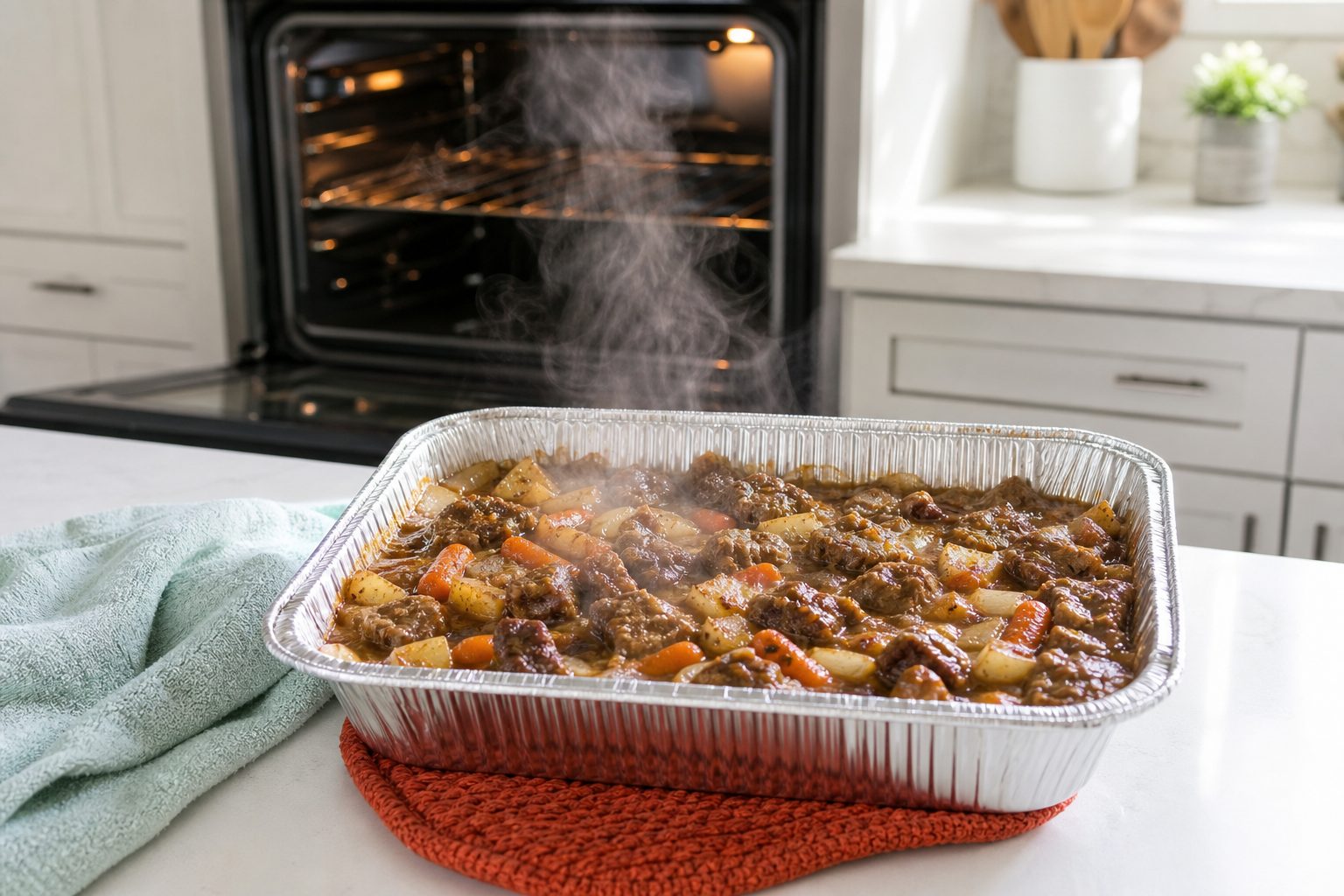
Why do my customers say the beef comes out watery after they reheat my frozen entrees?
Ice crystal size, sauce thickeners that break, undercooked vegetables and overfilled pans all show up at the customer oven. The freeze side causes and the fixes that hold.
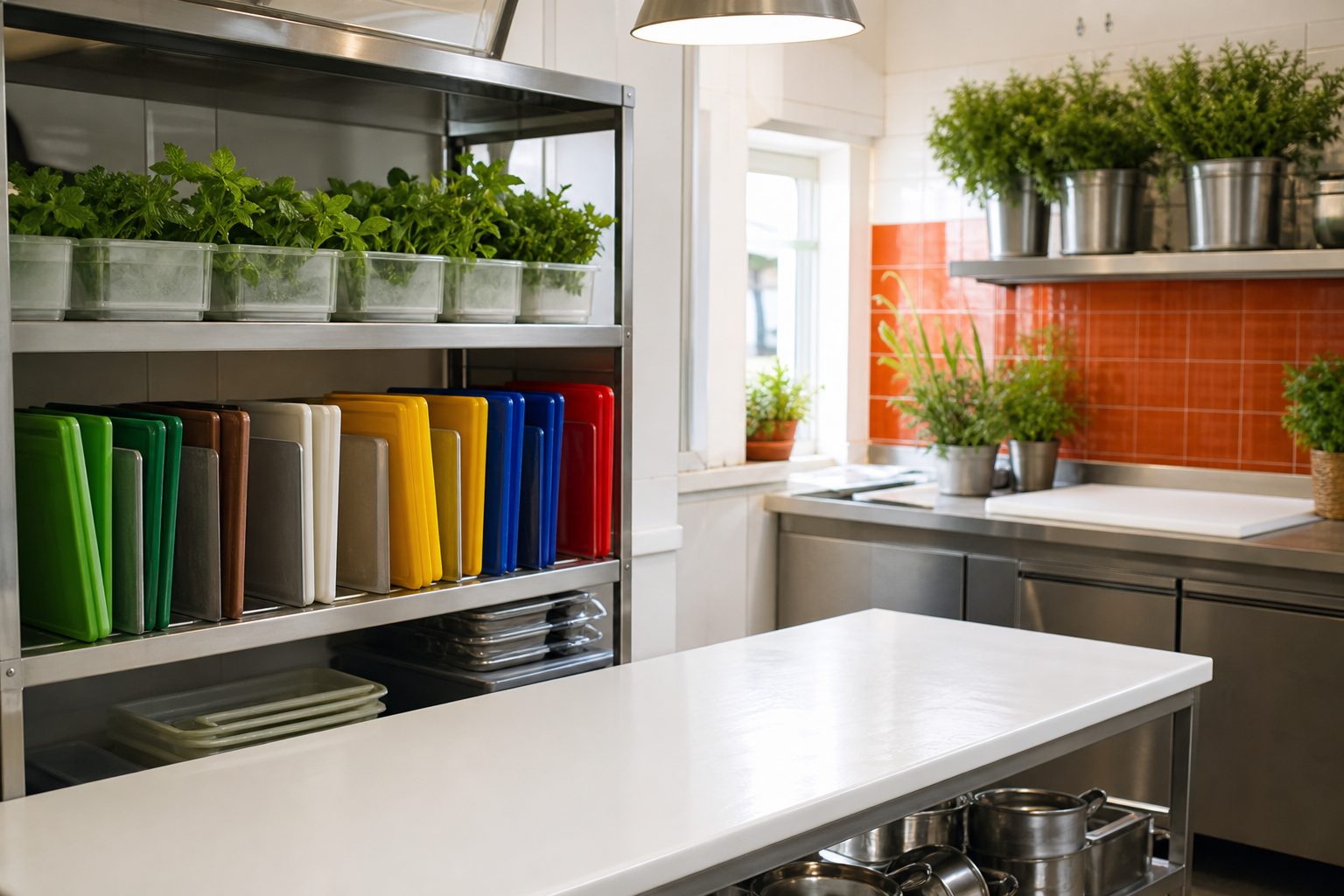
How does a small kitchen safely serve a family with a peanut and dairy allergy every week?
Allergen segregation is scheduling, storage and cleaning more than it is recipes. How working kitchens sequence production, verify labels and communicate risk to a repeat allergy household.

How did one kitchen grow from twelve boxes to a hundred without hiring a second cook?
Batch consolidation, a fixed four week menu rotation, sub recipe prep days and a single pick list did most of the work. A close look at what changed and what stayed the same.