regulation and compliance
Do I need a commercial kitchen license to sell frozen family meals from my home state?
Cottage food laws almost never cover frozen entrees. Here is how state retail food establishment licensing, commissary agreements and shared kitchen leases actually apply to a freezer meal operation.
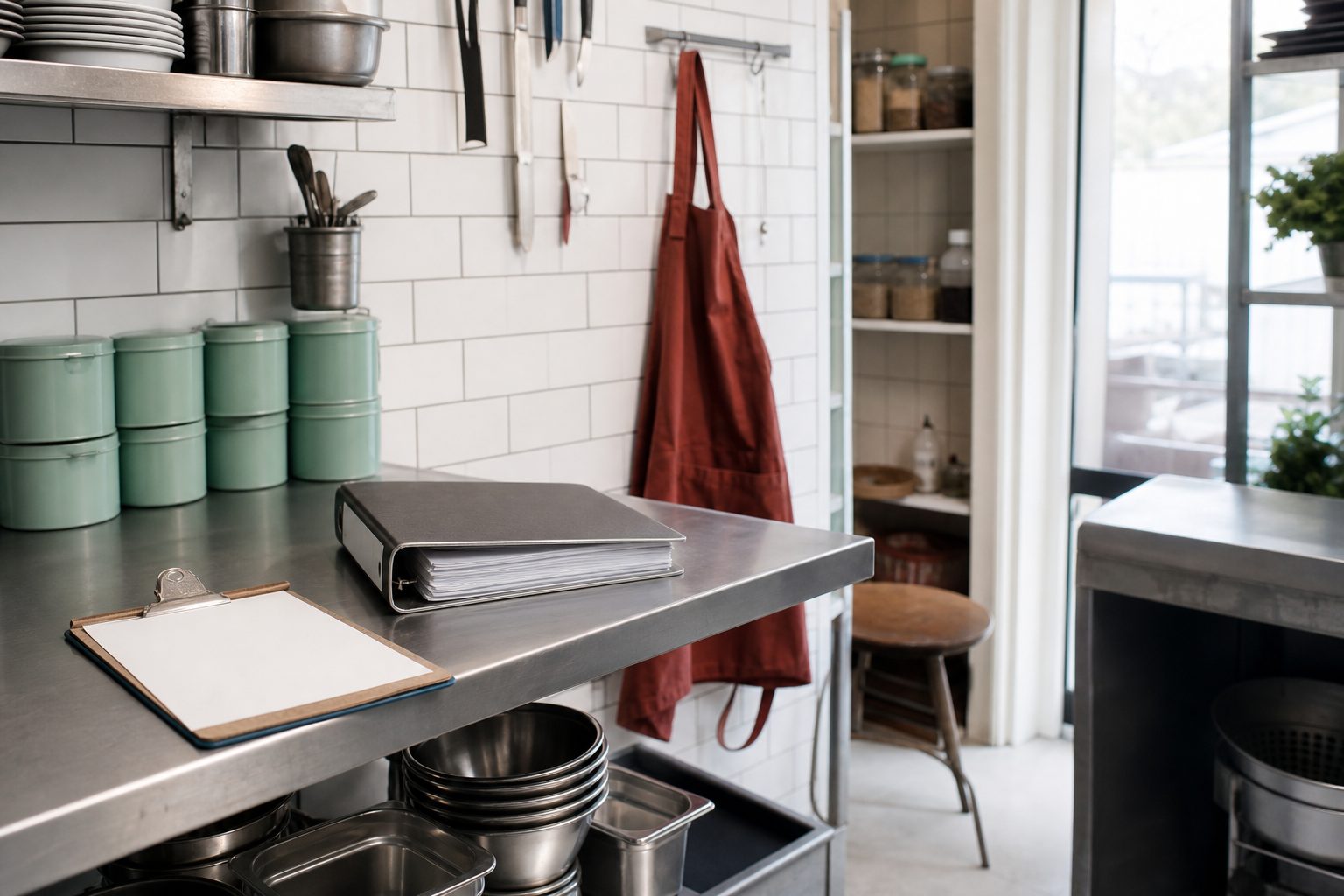
In almost every state, no. You cannot sell frozen family entrees out of your home kitchen under a cottage food law. Cottage food statutes were written for shelf stable, low risk items: cookies, jams with a tested pH, breads, granola, hard candy. A frozen chicken and rice casserole is a time and temperature control for safety food, usually written in the rules as TCS. Producing it for sale puts you under your state's retail food establishment licensing, which means an inspected commercial kitchen.
Accept that quickly rather than spending six weeks hunting the loophole. The path is well worn. Most freezer meal operations rent time in a licensed shared kitchen, get their own retail food establishment license tied to that address, and pass a plan review before cooking a tray for a customer. Here is how those pieces fit together, in the order you will meet them.
Why frozen entrees fall outside almost every cottage food law
Cottage food laws share an architecture. They list allowed foods, cap annual sales, restrict where you may sell, and require a label saying the food was made in an uninspected home kitchen. The allowed list is built around one idea: the food must not support rapid pathogen growth at room temperature.
Your product does the opposite. Cooked chicken, rice, beans, dairy sauces and par cooked pasta are all TCS foods. Freezing is not a kill step and it is not a preservation approval. It slows things down. The moment that tray thaws on a customer's counter it is in the temperature danger zone the regulations are written around.
There are narrow adjacent exceptions people confuse with permission. A few states allow home based food operations, sometimes called a home processor license, with actual inspection of the home kitchen and a restricted product list. Those lists rarely include a meat and starch main dish.
The two questions that settle it
When you call your health department you need two answers. Does my state's cottage food list include cooked, frozen, multi ingredient entrees containing meat or dairy? If not, what license category do I fall into? Ask both in one call.
Keep reading: How do I price a five meal weekly family box so it still clears thirty percent food cost?
What a retail food establishment license covers and who issues it
A retail food establishment license, sometimes called a food service establishment permit, a food processing license, or simply a food permit depending on the state, is a license attached to a physical address and a defined scope of operations. It is not attached to you personally. Move kitchens, and you are amending or reissuing the license.
Who issues it depends on where you sit in the food chain. Broadly:
- Local or county health department. Most retail operations, meaning you sell direct to the end consumer. This covers the majority of freezer meal businesses selling weekly boxes to families.
- State department of agriculture. Often takes over when you are wholesaling to another business for resale, or when your product is packaged and labeled for later retail sale off site.
- USDA Food Safety and Inspection Service. Applies when meat or poultry products are processed for wholesale distribution outside a retail exemption, with continuous or periodic federal inspection.
The line between retail and wholesale matters more than most new operators expect. Selling a frozen lasagna directly to the family who ordered it is retail. Selling twenty of the same lasagnas to a gym that resells them at their front desk is wholesale, and it can pull you into a different agency, different labeling rules and different inspection frequency.
Commissary agreements versus leasing time in a shared commercial kitchen
These two terms get used interchangeably and they are not the same. A commissary agreement is a signed document in which a licensed kitchen agrees to serve as your base of operations: your food prep, your warewashing, your storage, your water and waste. Health departments require one from mobile and temporary operators, and often from anyone whose license is not tied to their own building.
A shared commercial kitchen lease is a commercial arrangement about hours, storage and access. A good shared kitchen will provide the commissary letter as part of onboarding. A poorly run one will hand you a rate card and nothing else, and you will find out at plan review that you have no documentation.
| Consideration | Shared kitchen by the hour | Dedicated small kitchen lease |
|---|---|---|
| Typical entry cost | Hourly rate plus a monthly storage fee | Rent, deposit, buildout, equipment |
| Your license | Yours, tied to that address, with a commissary letter | Yours, tied to your address |
| Freezer capacity | Shared and usually the first constraint | Sized by you |
| Scheduling risk | High. Holiday weeks book out | None |
| Best for | Under roughly 100 boxes a week | Steady weekly volume with repeat customers |
The freezer row is the one that ends most shared kitchen relationships. Meal prep is freezer heavy in a way that catering and baking are not. Confirm in writing how many cubic feet of frozen storage you get and whether it is lockable before volume forces the question.
Keep reading: How many pounds of chicken should I thaw for forty orders without wasting a case?
The plan review packet your health department will ask for
Plan review is the approval step before a license is issued. Even when you are using someone else's licensed kitchen, most jurisdictions want a scaled down version because your process, not just the room, is being approved. Typical contents:
- A completed application with your legal business entity and owner information.
- A menu or full product list, including every entree you intend to produce.
- A process flow for each item: receive, store, prep, cook, cool, package, freeze, hold, transport.
- Your cooling method and equipment, which is the part they will read closely.
- A floor plan of the kitchen showing sinks, handwashing stations, storage and equipment.
- Employee health policy and a written procedure for vomiting and diarrheal events.
- Your commissary agreement, if the kitchen is not yours.
- Proposed labels, including allergen declarations and any date marking.
Cooling is where freezer meal applications get sent back. The FDA Food Code cooling parameter that most states adopt is two stage: from 135 degrees Fahrenheit down to 70 within two hours, then down to 41 within a further four, for six hours total. Writing "cool in the walk in" is not a process. Writing "portion into two inch deep hotel pans, uncovered, on the top shelf of the blast chiller, probe checked at 90 minutes and logged" is a process. Say which pans, which depth and where the log lives.
Food manager certification and who on your team needs it
Two different credentials get confused here. A food handler card is the basic one, often a couple of hours online, sometimes required of everyone touching food. A certified food protection manager credential is the serious one, earned through an accredited exam such as ServSafe Manager, the National Registry exam, Prometric or 360training, and valid for five years.
Most adopted versions of the Food Code require at least one certified food protection manager for the establishment. In practice, for a small kitchen, that is you. Some jurisdictions require the certified person to be on site during operating hours, which changes your staffing plan the day you take a vacation. Ask specifically whether your county requires presence or only employment.
Budget realistically: expect a course and exam in the range of roughly 150 to 200 dollars per person, plus proctoring, and treat that as an assumption to verify with your chosen provider rather than a fixed figure.
See how FreezerFive handles this for meal prep and freezer meal businesses
Selling across state lines and when federal or state inspection applies
Interstate shipping changes the analysis. A retail exemption in your home state governs sales to consumers in your state. Ship a frozen chicken entree to a customer two states away and you have potentially entered federal jurisdiction, because meat and poultry products in interstate commerce fall under USDA FSIS.
There is a retail exemption within the federal meat and poultry rules, but it is narrow. It contemplates normal retail sales to household consumers, limits the share of sales that can go to hotels, restaurants and institutions, and expects the product to be prepared at the retail location. Direct to consumer shipping across state lines pushes hard on those boundaries and is exactly the question to put to your state department of agriculture in writing before you build a shipping page.
For most weekly box operations, the sane answer is to define a delivery radius and stay retail. Local delivery to households in your own county is the simplest regulatory footing you will ever have, and it also happens to be the model where the unit economics work.
Questions to ask your local inspector before you sign a kitchen lease
Take these to the phone call. Write the answers down with the date and the name of the person who gave them.
- Which license category does a frozen, ready to heat family entree operation fall under here?
- Is a full plan review required if I operate inside an already licensed shared kitchen?
- Does this kitchen currently hold a license in good standing, and can I see the last inspection report?
- Will you accept a two stage cooling process using hotel pans, or do you require a blast chiller for my volume?
- Does my product require nutrition labeling, or does a small business exemption apply?
- Must the certified food protection manager be physically on site during production?
- Am I permitted to transport frozen product in my personal vehicle, and what temperature documentation do you expect?
- What triggers a change from a retail license to a processing or wholesale license?
That last one is your growth question. Knowing the threshold before you cross it means you plan the transition instead of discovering it during an inspection.
Where the paperwork ends and the kitchen begins
Licensing is a one time gauntlet. Running the kitchen afterward is where the compliance you promised in plan review either happens or quietly does not. Your labels said which of the nine major allergens are present. Your production plan said forty boxes, which means a specific number of pounds of protein pulled on a specific day.
FreezerFive is built for that side of it: weekly menu ordering that turns customer selections into a scaled ingredient list, allergen flags carried from recipe to label, printed pick lists for the production day, and delivery routes grouped by neighborhood. Get the license first, then let the software carry the week so the standards you wrote down are the standards you actually run.
Read also
How do I price a five meal weekly family box so it still clears thirty percent food cost?
Build the price from the plate up: costed recipes, yield loss, packaging, labor per pan and delivery. A worked example for a five entree box serving a family of four.
How many pounds of chicken should I thaw for forty orders without wasting a case?
Thaw math starts with portion weight, multiplies by orders, then adds yield loss and a safety margin. A step by step method plus the refrigerated thaw timing that keeps you legal.
What actually has to go on my frozen meal label before it leaves my kitchen?
Statement of identity, net weight, ingredient list in descending order, allergen declaration, your name and address, plus handling instructions. A line by line label audit you can run today.